

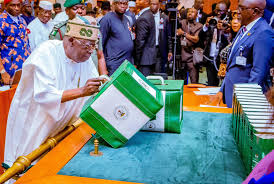

The economic and policies reforms implemented by Nigerian President Bola Tinubu since his inauguration in May 2023. As of January 4, 2026, the administration describes it as a “macro-fiscal reset” designed to address deep structural distortions within the Nigerian economy under significant constraints like inherited debt and foreign exchange instability.
Starting from the Fuel Subsidy Removal: On his first day in office, President Tinubu announced the end of the petrol subsidy to redirect funds toward infrastructure and social services.
Naira Liberalization: Before the advent of this administration, Nigeria Naira operations can be described as being artiticially pegged. By using Naira to pegged foreign currencies. The administration floated the Naira, allowing its value to be determined by market forces rather than being artificially pegged.
Tax Reform: New tax laws are set to take effect on January 1, 2026, aiming to streamline administration and improve the tax-to-GDP ratio.
Renewed Hope Agenda: An eight-point priority plan focusing on food security, poverty eradication, growth, job creation, and anti-corruption.
Infrastructure & Energy: Strategic focus on completing inherited rail and power projects, including a pivot toward Compressed Natural Gas (CNG) and local refining capacity (e.g., the Dangote Refinery).
Economic Status (As of January 2026)
Aims: The administration aims to grow the economy to a $1 trillion level and reduce inflation from peaks above 34% to a target of 15%.
Fiscal Position: Government officials emphasize that the policy was never intended for “instant abundance” but as a long-term strategy to rebuild national credibility and price signals.
Challenges: The reforms have led to significant transitory hardship, including high inflation and increased cost of living for many Nigerians. Critics point to high debt servicing costs and the immediate “shock” of combined subsidy removal and currency devaluation.
Investment: The government continues to market Nigeria to investors by resolving earnings repatriation issues and improving security.
Director-General of the Budget Office of the Federation, Tanimu Yakubu, has dismissed critics of Tinubunomics as peddlers of “theatrical arithmetic,” charging that public outrage over Nigeria’s fiscal figures stems from basic misunderstandings of public finance.
In a statement on Sunday, Yakubu argued that sensational headline numbers—often aggregating tax collections, oil receipts, borrowings, and subsidy savings—create an “arithmetic illusion” rather than genuine economic analysis.
“Revenue is not the same as cash available to the Federal Government. Borrowing is not income; it is financing that creates future obligations. Federation receipts are not equivalent to what the Federal Government can spend,” he stated.
Yakubu highlighted common errors: lumping gross tax figures with net oil revenues, double-counting customs duties, and treating borrowings or subsidy reforms as instant windfalls.
This inflates totals to N150 trillion, N170 trillion, or N180 trillion, prompting cries of “where did the money go?” His answer: much of it never existed as spendable cash.
On fuel subsidy reform, he clarified that benefits accrue gradually—through reduced deficits, better budgeting, and targeted aid—rather than sudden cash piles from closed fiscal leaks.
Addressing Nigeria’s rising debt, Yakubu noted that much of the naira-denominated increase comes from exchange-rate revaluations of existing dollar debts, not fresh borrowing.
“Treating this accounting effect as fresh borrowing is a category error,” he said.
He also stressed Nigeria’s federal revenue-sharing system, where inflows are divided among federal, state, and local governments—not available solely to Abuja. True budget reality hinges on federally retained revenue plus deficit financing, not gross aggregates.
Tinubunomics, Yakubu reiterated, aims for a macro-fiscal reset amid inherited debts, forex pressures, security costs, and arrears—not overnight riches. Real accountability demands audit logic: tracking retained revenues, expenditures, and outputs like infrastructure and social services.
“Accountability does not begin with social-media arithmetic. It begins with audit logic,” he concluded.


