

*Region Faces Dangerous Escalation as Conflict Enters Third Week
By Daud Awwal
Senior Correspondent, The National Press Newspaper
15 March 2026
Middle East — A dramatic military confrontation between the United States, Israel, and Iran has plunged the region into one of its most dangerous crises in decades. The conflict, which began on 28 February 2026, has rapidly expanded into a multi-front war involving missile attacks, airstrikes, and proxy forces across several countries.
Military analysts warn that the conflict could reshape the geopolitical balance of the Middle East and potentially disrupt global energy supplies if it continues to escalate.
War Begins: Massive Airstrikes on Iran
The war began when the United States and Israel launched coordinated airstrikes against Iranian military and strategic targets. The operation targeted missile bases, air defence systems, military command centres, and suspected nuclear-related facilities across Iran.
According to early reports, hundreds of targets were struck within the first hours of the campaign. The strikes reached major Iranian cities, including Tehran, Isfahan, and Shiraz.
One of the most dramatic developments occurred when Iran’s long-time Supreme Leader Ali Khamenei was reportedly killed during the opening phase of the attacks. Iranian authorities later confirmed a leadership transition to his son, Mojtaba Khamenei.
Iran Launches Retaliatory Strikes
Within hours of the initial strikes, Iran began retaliating with waves of ballistic missiles and armed drones directed toward Israel and American military bases across the Middle East.
Air-raid sirens sounded across Israeli cities, including Tel Aviv and Jerusalem, as defensive missile systems intercepted incoming attacks.
Several U.S. bases in the region were also targeted, prompting American forces to activate air defence systems and reinforce military installations.
Second Front Opens in Lebanon
The conflict widened further when Hezbollah, the Iran-backed armed group based in Beirut, began launching rockets toward northern Israel.
In response, Israel conducted airstrikes on militant positions inside Lebanon, raising fears that the war could expand into a full regional conflict.
Military analysts warned that the involvement of regional proxy groups could prolong the fighting and complicate efforts to reach a diplomatic solution.
Economic Shock and Global Concerns
The war has already begun to impact global markets. Oil prices surged amid fears that conflict near the Strait of Hormuz could disrupt international energy supplies.
The narrow waterway handles nearly one-fifth of the world’s oil shipments, making it one of the most strategically important maritime routes in the world.
Energy analysts say any prolonged disruption could send fuel prices sharply higher across global markets.
Humanitarian Impact
As the war continues, civilians in several regions have been affected by missile attacks and airstrikes. Emergency services across Israel and Iran have been responding to damage in residential areas and infrastructure.
Humanitarian organisations warn that the number of casualties could rise significantly if the conflict intensifies.
Global Reactions
Governments around the world have called for restraint and urged diplomatic negotiations to prevent a wider war.
International organisations are also closely monitoring the situation as tensions continue to rise across the Middle East.
Timeline of Key Events
28 Feb 2026 – U.S. and Israel launch major airstrikes across Iran.
1–2 March – Iran launches missile and drone attacks on Israel and U.S. bases.
3–4 March – Rocket fire from Lebanon opens a second front.
Week Two – Airstrikes intensify across Iranian military infrastructure.
15 March – Conflict enters its third week with ongoing attacks and rising global concern.
Outlook
Security experts warn that the conflict remains highly volatile. While the United States and Israel maintain strong air superiority, Iran’s missile capabilities and regional alliances continue to pose a serious threat.
Diplomatic efforts to de-escalate the situation are ongoing, but the path toward peace remains uncertain.
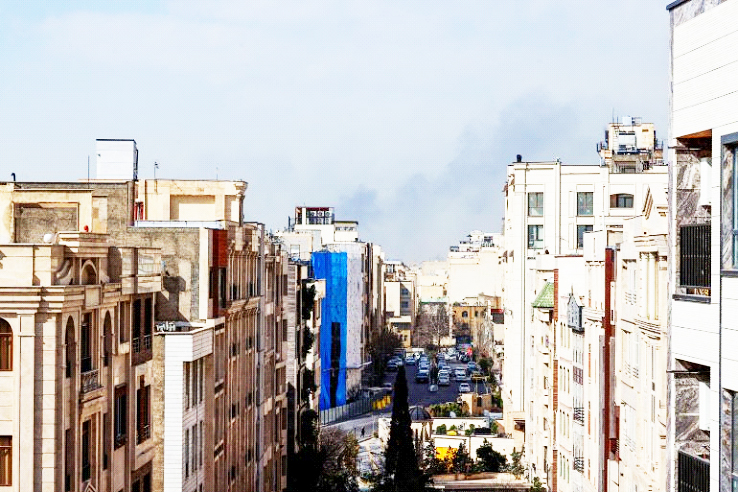
A plume of smoke rises following a reported explosion in Tehran
© The National Press Newspaper
Special Coverage – Middle East Conflict


