

A Historic Institution Rooted in Military Leadership, Unity and the Administration of Ilorin Emirate
By Daud Awwal, The National Press Newspaper UK
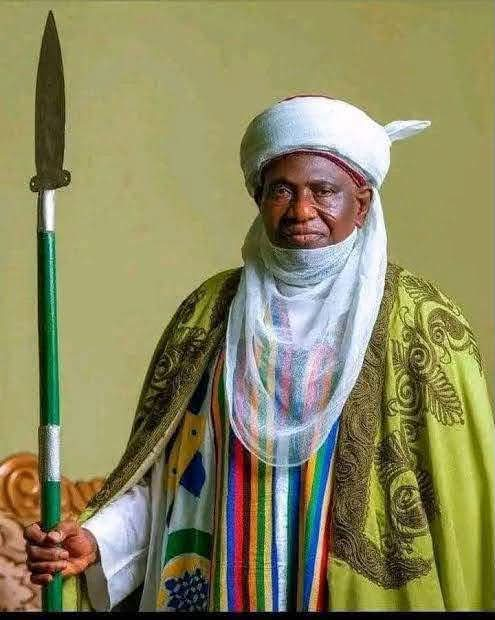
The Ilorin Emirate has been thrown into mourning following the death of Alhaji Aliyyu Adebayo, the Balogun Gambari of Ilorin and one of the most senior traditional chiefs in the Ilorin Emirate Council. He was aged 86.
His death represents the passing of an important figure in the traditional political and military heritage of Ilorin, a man whose position placed him at the heart of the Emirate’s traditional administration and community leadership.
Alhaji Adebayo was widely regarded as a loyal traditional chief, a courageous personality, an honest man and a community-minded leader. Throughout his traditional service, he was known for his loyalty to the Emir of Ilorin, His Royal Highness, Alhaji (Dr) Ibrahim Sulu-Gambari, CFR, and his commitment to the preservation of the dignity, unity and stability of the Ilorin Emirate.
He was also remembered for his boldness, generosity, accessibility and concern for the welfare of members of his community. His reputation as a man of courage reflected the historical military character associated with the Balogun institution.
HIS EMERGENCE AS BALOGUN GAMBARI
Alhaji Aliyyu Adebayo’s emergence as Balogun Gambari was accompanied by a prolonged chieftaincy controversy involving the late Alhaji Abdul Kareem Laaro Buhari, who was also recognised as a holder of the title.
The dispute became a major traditional and legal issue within the Ilorin Emirate.
The Emir of Ilorin appointed Adebayo to the title in 2005, during a period of serious disagreements involving some traditional chiefs and the Emirate Council. Contemporary reports published in September 2005 recorded his appointment and turbaning alongside other newly appointed traditional chiefs.
The dispute subsequently found its way into the courts, with Alhaji Abdul Kareem Laaro Buhari challenging the appointment and recognition of Adebayo.
The matter eventually reached the Supreme Court of Nigeria in Buhari v. Adebayo, Suit No. SC.247/2014.
On 18 February 2022, the Supreme Court delivered its judgment in the case. The decision addressed fundamental defects in the originating court process, particularly the failure to have the writ of summons properly signed by a recognised legal practitioner.
The judgment was significant in the lengthy legal history surrounding the competing claims.
Alhaji Abdul Kareem Laaro Buhari, who was reported to have been turbaned as the 11th Balogun Gambari in 1988, died on 10 May 2024 at the age of 97.
The passing of the two personalities brings to an end an important chapter in the history of the Balogun Gambari title and its succession controversies.
THE ORIGIN OF THE BALOGUN INSTITUTION IN ILORIN
To appreciate the historical significance of the late Alhaji Aliyyu Adebayo’s position, it is important to understand the origin of the Balogun institution and the circumstances surrounding its establishment in the Ilorin Emirate.
The institution dates back to the formative years of the Ilorin Emirate in the early nineteenth century, during the reign of the first Emir, Abdus-Salami (c.1823–1842), son of Sheikh Alimi.
Following the emergence of Ilorin as an Islamic emirate, its leadership faced the challenge of bringing together different ethnic, linguistic and cultural communities under one political and administrative structure.
Ilorin was already a diverse settlement comprising Yoruba, Fulani, Hausa and other communities from different parts of West Africa.
The first Emir recognised the importance of accommodating these communities in the administration and defence of the emerging Emirate.
Consequently, the Balogun institution developed as an important instrument of military organisation, political representation and traditional administration.
Historical accounts identify the early Baloguns as military commanders who organised and led the different contingents of soldiers responsible for defending Ilorin against external attacks.
The military organisation was subsequently incorporated into the administrative structure of the Emirate, particularly around 1828, when Emir Abdus-Salami reorganised the traditional political system.
Under this arrangement, the Baloguns became both military leaders and political heads of their respective communities.
This development was not merely an administrative arrangement; it was also a deliberate strategy for promoting unity, representation and cooperation among the different groups that constituted the Ilorin Emirate.
THE FOUR HISTORICAL BALOGUN TITLES OF ILORIN
The Ilorin Emirate traditionally recognises four principal Balogun titles:
- Balogun Gambari: Historically associated with the Gambari and northern communities of Ilorin.
- Balogun Fulani: Associated with the Fulani community.
- Balogun Ajikobi: Associated with the Ajikobi community.
- Balogun Alanamu: Associated with the Alanamu community.
Each title developed its own historical identity, traditional succession arrangements and sphere of community leadership.
The original military commanders were instrumental in defending Ilorin and strengthening the authority of the Emir.
The Balogun Alanamu title, for instance, became firmly established as a separate office during the reign of the second Emir, Shitta, following the separation of Alanamu from the Ajikobi administrative arrangement.
The four institutions have remained important pillars of the traditional political organisation of the Emirate.
The four institutions have remained important pillars of the traditional political organisation of the Emirate.
THE FIRST BALOGUN GAMBARI
Historical accounts identify Ali Pakumo Doshe, also spelt Dose or Duse, as the first Balogun Gambari.
He was a seasoned soldier whose military experience reportedly dated back to the period of Afonja.
He was appointed to command the Gambari military contingent and subsequently became the first Balogun Gambari under the developing Emirate administration.
Historical research also associates him with the position of overall military commander of the Ilorin army.
His appointment reflected the importance attached to military experience, courage and organisational ability in the early years of the Emirate.
It is important to distinguish the office of Balogun Gambari from that of Sarkin Gambari, the traditional leadership of the Gambari community. Although the two institutions were closely connected historically, they were not necessarily identical offices.
Among the notable historical military personalities associated with the Gambari military tradition was Balogun Gambari Karara, whose name appears in accounts of Ilorin’s nineteenth-century military campaigns.
The military history of the Gambari institution is therefore closely connected with the wider history of the formation, defence and expansion of the Ilorin Emirate.
HISTORICAL RECORD OF THE BALOGUNS
THE HISTORICAL LINEAGE OF BALOGUN GAMBARI
The history of the Balogun Gambari institution is closely connected with the military and political development of Ilorin in the nineteenth century. Among the historical personalities associated with the institution and its antecedent leadership are Sarkin Gambari, Ali Gambari (Karara), Sarkin Gambari Bako and Alhaji Shuaib Mairogo, who reportedly assumed the title in 1919.
In the more recent history of the institution, Alhaji Abdul Kareem Laaro Buhari, recognised as the 11th Balogun Gambari, served as a prominent traditional chief until his death on 10 May 2024, aged 97.
Alhaji Muhammad Aliyyu Adebayo, appointed in 2005, subsequently occupied the senior Balogun position in the Ilorin Emirate Council. His death on 24 November 2026, aged 86, marks another significant moment in the history of the institution.
The lineage demonstrates the continuity of an institution whose origins are rooted in military leadership, community representation and traditional governance.
The succession history of the four Balogun institutions is an important subject for researchers of Ilorin history.
For the Balogun Gambari title, historical accounts identify the following personalities:
- Ali Pakumo Doshe: Recognised in historical accounts as the first Balogun Gambari.
- Karara: A prominent nineteenth-century Balogun Gambari associated with Ilorin’s military campaigns.
- Abdulkareem Laaro Buhari: Reported as the 11th Balogun Gambari, turbaned in 1988 and deceased in May 2024.
- Aliyyu Adebayo: Appointed by the Emir in 2005 and subsequently recognised as a senior Balogun of the Emirate.
These names are not presented as a complete succession list. A fully authenticated list of every holder, with their respective years of appointment and reign, requires confirmation from the Ilorin Emirate Council and the relevant family records.
Nevertheless, the available historical evidence establishes the longevity and importance of the institution.
THE IMPORTANT ROLES OF BALOGUNS IN ILORIN EMIRATE
The Balogun institution has played several important roles in the survival, development and political organisation of Ilorin.
- Military defence and protection
The original responsibility of the Baloguns was to organise, mobilise and command soldiers for the defence of the Emirate.
They led military expeditions and defended Ilorin against external threats. During the nineteenth century, Ilorin participated in several important military engagements across Yorubaland.
Historical accounts mention the contributions of Balogun Gambari Ali, Balogun Fulani Hina Konu and Balogun Alanamu Ali Inakoju, among other military leaders. - Administration of their respective communities
Following the reorganisation of the Emirate, the Baloguns became traditional heads of their respective wards.
They exercised authority over their communities and worked with subordinate traditional titleholders, including Mogajis and other local leaders. - Membership of the Emir’s Council
The Baloguns are important members of the Ilorin Emirate Council, which serves as a major traditional decision-making and advisory institution.
They participate in consultations concerning the administration, security, development and general welfare of the Emirate. - Traditional king-making responsibilities
The Baloguns are also important participants in the traditional king-making structure of the Emirate.
Their position within the traditional hierarchy gives them a significant role in matters concerning the succession and selection of an Emir, in accordance with established tradition. - Promotion of peace and unity
Given the different ethnic and cultural origins of Ilorin’s population, the Balogun institution historically provided an avenue for representation and cooperation.
The arrangement helped integrate different communities into one political structure under the authority of the Emir. - Community development and security
In contemporary Ilorin, the Baloguns continue to play important roles in community mobilisation, conflict resolution, traditional security arrangements and the promotion of peaceful coexistence.
Their influence extends beyond ceremonial responsibilities to the preservation of cultural identity and the welfare of their respective communities.
BALOGUN AGBA: THE MOST SENIOR BALOGUN
Another important feature of the Ilorin traditional hierarchy is the position of Balogun Agba.
Balogun Agba is the most senior Balogun among the four principal Baloguns of the Emirate.
The position is associated with seniority within the Balogun institution and carries considerable traditional responsibility.
Historically, the most senior Balogun also occupied a prominent military leadership position, including the role of overall commander of the Ilorin army.
In the contemporary traditional administration, the Balogun Agba occupies a distinguished position in the Emirate Council and is among the most senior traditional authorities after the Emir.
Alhaji Aliyyu Adebayo’s emergence as the senior Balogun placed him in this important position within the Emirate’s traditional leadership structure.
His position was particularly significant because it carried responsibilities beyond the administration of the Gambari community.
A LEGACY OF COURAGE, LOYALTY AND SERVICE
Beyond the historical importance of his title, Alhaji Aliyyu Adebayo will be remembered for his personal qualities and relationship with the people.
His admirers regarded him as a courageous traditional leader who understood the responsibilities attached to his office.
He was described as loyal to the Emir, firm in his convictions, honest in his dealings and concerned about the well-being of his community.
His traditional service reflected the enduring expectations of the Balogun institution: courage, discipline, loyalty, responsibility and commitment to the protection of the Emirate.
The Balogun title is not simply an honour bestowed upon an individual. It carries a historical responsibility inherited from generations of military commanders and traditional administrators who contributed to the survival and development of Ilorin.
The late Adebayo therefore belonged to a long tradition of leadership that connected the military heritage of nineteenth-century Ilorin with the contemporary administration of the Emirate.
The death of Alhaji Aliyyu Adebayo on 24 November 2026, at the age of 86, marks the end of an important chapter in the contemporary history of the Ilorin Emirate.
His departure comes approximately two years after the death of his traditional title rival, Alhaji Abdul Kareem Laaro Buhari, who died on 10 May 2024, aged 97. Laaro was recognised as the 11th Balogun Gambari of Ilorin.
The prolonged disagreement surrounding the Balogun Gambari title remains an important episode in the traditional and legal history of the Emirate. Adebayo’s appointment in 2005 and the subsequent court proceedings attracted considerable attention within Ilorin’s traditional institution.
With the passing of both personalities, the history of the Balogun Gambari institution deserves careful documentation for the benefit of future generations.
The death of Alhaji Aliyyu Adebayo at the age of 86 marks the end of an important chapter in the contemporary history of the Ilorin Emirate.
His life and traditional service provide an opportunity to revisit the historical significance of the Balogun institution, established during the formative years of the Emirate under the first Emir, Abdus-Salami.
From the battlefields of nineteenth-century Ilorin to the modern Emirate Council, the Baloguns have remained central to the traditional, political and social development of the community.
The institution represents not only military strength but also the historical accommodation of different communities within one traditional administration.
As the Ilorin Emirate mourns the departure of Alhaji Aliyyu Adebayo, his memory will remain associated with the responsibilities, courage and dignity of the Balogun Gambari title.
May Almighty Allah forgive his shortcomings, accept his good deeds, grant him Al-Jannatul Firdaus and give his family, the Gambari community, the Emir of Ilorin and the entire Ilorin Emirate the fortitude to bear this irreparable loss.
Dr.Daud Awwal
The National Press, London
25 November,2026


