

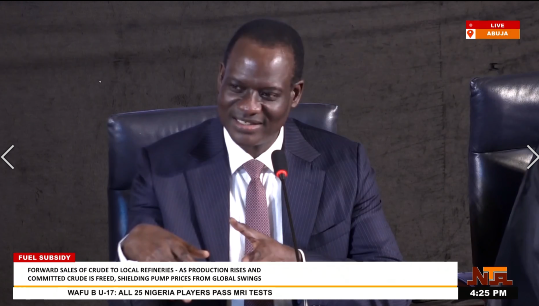
At Chatham House, the Minister of Finance and Coordinating Minister of the Economy, Taiwo Oyedele, highlighted the progress of Nigeria’s economic reforms, stressing that the priority is to sustain policy discipline, attract investment and translate macroeconomic gains into better living standards.
Key Highlights of Nigeria’s Economic Reform Progress
- By the end of 2025, petrol subsidy removal had saved ₦15.88 trillion, equivalent to approximately $12 billion, which would otherwise have been spent on subsidising petrol consumption.
- Resources released by subsidy removal are being channelled into higher wages, education, roads, power and social protection.
- Nigeria has maintained a unified, market-determined exchange-rate system rather than returning to multiple exchange-rate windows and administrative rationing.
- The government’s cash transfer programme has reached more than 10 million households, with digital payments verified through National Identification Numbers to improve transparency and reduce intermediary interference.
- Investments are being directed towards agricultural technology, year-round irrigation, storage facilities, rural roads and security for farming communities.
- Access to finance is being expanded for smallholder farmers and small businesses, which play a major role in job creation.
- The alternative to reform would have meant rising subsidy costs, longer foreign-exchange queues, a weakening naira, runaway inflation, unemployment and deeper poverty.
- The government intends to maintain the core reforms through the election period, with spending guided by budget plans rather than political pressure.
- Budget preparation and execution are being reformed, while information on government revenue, borrowing, debt servicing and expenditure is being made public.
- Priorities include a framework to guide economic policy and regulation, better public spending, stronger fiscal governance, and investment in physical and institutional infrastructure.
- Nigeria is highlighting its unified exchange rate, the ability to repatriate investment returns, a simpler and fairer tax system, and foreign-exchange reserves described in the address as being at an 18-year high.
- The government is seeking guarantees to reduce investment risks, technical expertise to strengthen institutions and cooperation to curb illicit financial flows draining resources from Africa.


