

Coastal erosion has become a critical challenge for the Lagos-Calabar Coastal Road, with significant portions of the construction route and surrounding communities facing immediate threats from the Atlantic Ocean.
Key Impacts on the Coastal Road
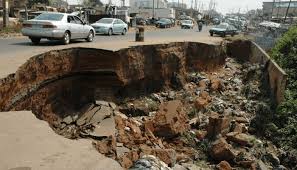
Infrastructure Risks: Experts have raised concerns that the lack of comprehensive drainage and stormwater channelization along the new carriageway has already led to the “washing away” of earth abutting the road and erosion of its stabilized sub-base.
Engineering Challenges: To combat these threats, the design must incorporate sea walls, dikes, and elevated causeways to withstand strong currents and rising sea levels.
Immediate Interventions: The Federal Government has deployed specialized shoreline protection, including concrete walling and retaining walls, particularly in sections approaching from Victoria Island.
Wider Environmental and Social Concerns
Community Displacement: In areas like Okun-Ajah, the ocean is rapidly encroaching on homes, a crisis exacerbated by the highway’s alignment.
Funding Requirements: The Lagos State Government estimates it needs over ₦3 trillion to effectively tackle coastal erosion across the state’s 180km coastline.
Environmental Impact Assessments (EIA): Critics point out that construction began months before the EIA was finalized, potentially ignoring long-term risks to wetlands and mangroves that naturally protect against erosion.
Current Mitigation Efforts
The Lagos State Government is exploring international partnerships, including with the Kingdom of the Netherlands, to deploy groyne technology—rigid structures built into the ocean to limit sediment movement. Meanwhile, the Eko Atlantic project uses the “Great Wall of Lagos,” an 8.5km rock and concrete barrier, as a model for protecting reclaimed land from surges.


