

Member states of the Economic Community of West African States (ECOWAS) have signed an intergovernmental agreement (IGA) backing the Nigeria-Morocco Atlantic gas pipeline.
The heads of state of ECOWAS member states signed the IGA for the African Atlantic gas pipeline (AAGP) project during the ECOWAS Summit in Freetown, Sierra Leone.
The West African Gas Pipeline (WAGP) is a 678-kilometre regional energy infrastructure system that transports natural gas from Nigeria to Benin, Togo, and Ghana.
Managed by the West African Gas Pipeline Company Limited (WAPCo), it represents sub-Saharan Africa’s first major transnational gas transmission system.
Begins at the Itoki terminal in Nigeria, runs offshore down the Atlantic coast, and terminates in Takoradi, Ghana.
Transports up to 5 billion cubic meters of gas per year, primarily fueling coastal power plants.
Led by Chevron (36.7%), with NNPC (25%), Shell (18%), and local state energy companies holding the remaining stakes.
Monetizes Nigeria’s vast reserves while replacing expensive, heavily polluting liquid fuels in neighboring countries.
The African Atlantic Gas Pipeline (AAGP)The regional energy network is entering a massive expansion phase.
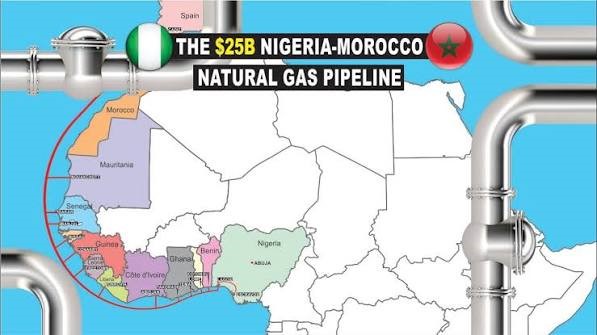
ECOWAS leaders signed a historic Intergovernmental Agreement to merge existing efforts into the Nigeria-Morocco African Atlantic Gas Pipeline (AAGP).
A $25 billion mega-infrastructure project stretching roughly 6,900 kilometers.
The extension will link 13 West African countries along the Atlantic coast directly to Morocco, connecting eventually to Spain and Europe’s energy grid.Timeline: Construction is slated to begin in 2028, with first gas deliveries targeted for 2031.Institutional Setup: The project company will be based in Casablanca, Morocco, while the Supreme Pipeline Governing Authority will operate out of Abuja, Nigeria


