

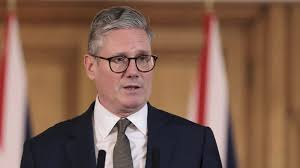
UK Prime Minister Keir Starmer was set to seal a deal for closer ties with the European Union at a landmark summit on Monday, opening a new chapter after Britain’s acrimonious exit from the bloc five years ago.
EU diplomats said on Monday a deal had been reached on resetting ties with the UK after late night talks to resolve differences on key sticking points.
EU member states had approved a trio of texts to be signed, particularly on defence, and, after a last-minute breakthrough, the thorny issue of fishing rights.
Starmer has pushed for closer UK ties with its European neighbours. The Labour government argues the EU deal negotiated with the UK’s previous Conservative government “isn’t working for anyone”.
But Starmer, who came to power in last July’s general elections ousting the Conservative Party, has several red lines he has said he will not cross.
Sticking points have remained over some EU demands and the Conservatives are already criticising the reset move as a “surrender”.
A source close to the talks told AFP that there was a “late breakthrough last night (and) still steps to take”.
The two sides would ink the “Security and Defence Partnership” — the highlight of Monday’s sit-down between Starmer and EU leaders Ursula von der Leyen, Antonio Costa and chief diplomat Kaja Kallas.
Two other documents are expected on Monday — a joint statement of European solidarity from the EU-UK leaders’ summit and a Common Understanding on topics from trade to fishing and youth mobility.
Under the final agreement, Britain will keep its waters open for European fishermen for 12 years after the current deal expires in 2026, in return for the 27-nation bloc indefinitely easing red tape on food imports from the UK, diplomats said.
On the issue of youth mobility, negotiators agreed to general wording that leaves the haggling for later.
The talks come as the EU and Britain race to rearm in the face of the threat from Russia and fears that under President Donald Trump the United States will no longer help protect Europe.
The defence partnership should mean more regular security talks, Britain possibly joining EU military missions and the potential for London to fully tap into a 150-billion-euro ($167-billion) defence fund being set up by the bloc.
But much of the detail is likely to be filled in later.
Giving the UK and its defence industry unfettered access to the EU programmes, for instance, would require further agreement.
Britain already has intertwined defence ties with 23 EU countries in NATO, so the defence pact was always seen as the easiest deal on the table.
“I think we should keep our sense of the importance of this relatively tempered,” said Olivia O’Sullivan, director of the UK in the World programme at the Chatham House think-tank.
“It’s the next step in closer cooperation… but not a resolution of many of the outstanding questions,” she told AFP.
Starmer has ruled out rejoining the EU customs union and single market but appears ready to align with the EU on food and agricultural products.


