

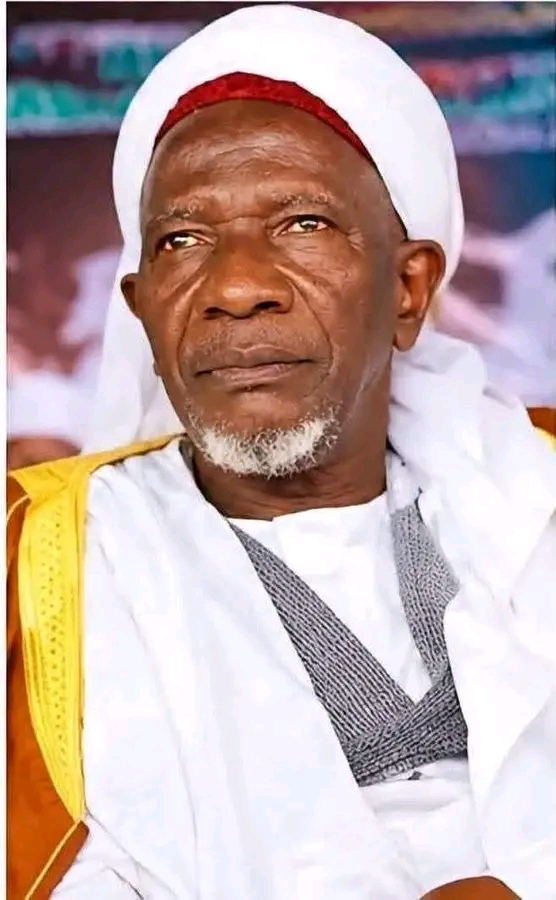
by Dr Daud Awwal
Introduction
Among the distinguished Islamic scholars who contributed to the development of Arabic and Islamic education and the propagation of Islam in southwestern Nigeria was the late Sheikh Ya’qub Abdullah Al-Ilory, the younger brother of the renowned Islamic scholar and founder of Markaz, Sheikh Adam Abdullah Al-Ilory (1917–1992).
Sheikh Ya’qub was a devoted scholar, Arabic teacher, preacher, institution builder, mentor and community leader. His life was characterised by commitment to Islamic knowledge, loyalty to family, dedication to his students and an enduring passion for the propagation of Islam.
Although he did not enjoy the same level of scholarly prominence as his elder brother, Sheikh Adam Abdullah Al-Ilory, he made significant contributions in his own right, particularly through his teaching activities, the establishment of an Arabic and Islamic educational institution in Shaki, his scholarly publication and his unwavering support for the family and educational legacy of his elder brother.
His Ancestry and Family Background
Sheikh Ya’qub Abdullah Al-Ilory was born in Ilorin, Kwara State, Nigeria. Unfortunately, the exact day and month of his birth have not yet been established. Based on the historical account that he was approximately twelve years younger than his elder brother, Sheikh Adam Abdullah Al-Ilory, who was born in 1917, Sheikh Ya’qub’s birth may be estimated to have been around 1929. This estimate, however, requires further verification.
His family history can be traced to his great-grandfather, Abdullahi, who migrated from the old Oyo area to Ilorin, where he eventually settled and established his family.
Abdullahi had several children; among them were Ilyas and others, including Habeeb, who was the father of Baaqee. Baaqee was the father of Sheikh Adam Abdullah Al-Ilory and Sheikh Ya’qub Abdullah Al-Ilory.
The two brothers adopted the name Abdullah in their scholarly identities in honour of their great-grandfather, whose name represented an important part of their family heritage. Thus, both became known as Sheikh Adam Abdullah Al-Ilory and Sheikh Ya’qub Abdullah Al-Ilory.
Their father, Sheikh Baaqee, was a man whose life involved travel and religious activities beyond Nigeria. He travelled to Waza in the present-day Republic of Benin, where he became the Imam of a mosque and married a princess named Aishat, who was the mother of Sheikh Adam Abdullah.
Sheikh Ya’qub, however, was born to a different mother, who was related to the Barba people of the Republic of Benin.
This family background demonstrates the historical connections between Ilorin and communities across the present-day Republic of Benin, reflecting the geographical and cultural mobility that characterised many Muslim families and scholars in the region.
His Childhood and Early Religious Education
Sheikh Ya’qub received his earliest religious education from his father, from whom he learned the Qur’an and acquired the foundations of Islamic knowledge.
He also benefited from the instruction of other Islamic scholars in Ilorin and different cities. His early exposure to Qur’anic education and the scholarly environment of Ilorin laid the foundation for his subsequent development as an Arabic teacher and Islamic preacher.
His father and Sheikh Adam played an important role in shaping the educational and religious direction of his life. The influence of his family, particularly his father and elder brother, helped nurture his interest in Islamic scholarship and religious service.
His Relationship with Sheikh Adam Abdullah Al-Ilory
One of the most significant aspects of Sheikh Ya’qub’s life was his close relationship with his elder brother, Sheikh Adam Abdullah Al-Ilory.
Sheikh Adam was approximately twelve years older than him and played a major role in his upbringing and education. Following the death of their father, Sheikh Adam took responsibility for his younger brother and brought him up under his care.
Sheikh Ya’qub benefited greatly from his elder brother’s knowledge, guidance and scholarly experience. He became one of his students and maintained a relationship characterised by love, respect, loyalty and mutual commitment.
Although Sheikh Adam was more knowledgeable and widely recognised for his scholarship, Sheikh Ya’qub developed his own identity as an educator, preacher and institution builder.
Their relationship was not limited to brotherhood. It was also a relationship between a teacher and his student, a mentor and his companion, and two brothers united by a shared commitment to Islamic education.
His Journey to Ibadan and Return to Ilorin
At an earlier stage of his life, Sheikh Ya’qub accompanied his father to Ibadan, where they stayed at the residence of Alfa Esin.
During this period, Sheikh Ilyas, a brother of Sheikh Ya’qub’s father and the Imam of Omoda in Ilorin, passed away.
Following his death, members of the family sent a message requesting that Sheikh Baaqee should return to Ilorin. In response to the family’s request, Sheikh Baaqee returned to Ilorin together with Sheikh Ya’qub.
This episode forms part of the early history of Sheikh Ya’qub’s family and illustrates the close relationship maintained between its members across different locations.
His Involvement in the Establishment of Markaz
Sheikh Ya’qub’s association with Markaz began during the formative period of the institution established by his elder brother, according to Sheikh Yaquub’s son, Sheikh Ilyaas.
When Sheikh Adam Abdullah Al-Ilory planned to establish his Arabic and Islamic school in Abeokuta in 1952, their father instructed Sheikh Ya’qub to accompany his elder brother and give him every necessary support.
This instruction from their father demonstrates the confidence he placed in Sheikh Ya’qub and the importance attached to cooperation between the two brothers in the establishment of the institution.
Sheikh Ya’qub obeyed his father’s instruction and became closely associated with the early development of the school.
He subsequently became one of the students in the second batch of Markaz graduates in Abeokuta.
The institution later underwent an important transition when Sheikh Adam re-established Markaz in Agege, Lagos, in 1957.
Sheikh Ya’qub’s participation in the early history of Markaz represents an important part of his educational background and his contribution to the development of Arabic and Islamic education in Nigeria.
His Missionary Activities in Ishaghamu
After his educational development and association with Markaz, Sheikh Ya’qub embarked on his own journey of Islamic propagation.
He travelled to Ishaghamu, where he established an Arabic and Islamic educational institution and worked as a teacher and preacher.
He became involved in teaching Arabic, educating Muslim children and adults, delivering religious sermons and promoting Islamic values within the community.
He also married in Ishaghamu and established family relationships there.
Among those who benefited from his teaching during his stay in the town was Dr Khidr Mustafa, who studied under him before Sheikh Ya’qub moved to other locations.
His activities in Ishaghamu demonstrate that his commitment to Islamic education was not limited to the institution of his elder brother. He was equally determined to establish centres through which Islamic knowledge could reach communities beyond Ilorin and Lagos.
His Movement to Akhaa and Shaki
After spending some time in Ishaghamu, Sheikh Ya’qub moved to Akhaa, now identified as Owode-Oja. He subsequently relocated to Shaki through the assistance and connection of one of his friends, Sheikh Daud Yafi.
Shaki eventually became the place where he settled permanently and established his own Arabic and Islamic educational institution.
Establishment of Markaz Arabic and Islamic Training Centre, Shaki
In Shaki, Sheikh Ya’qub established Markaz Arabic and Islamic Training Centre in 1972, an institution that became an important centre for Arabic and Islamic learning in the city. The institution celebrated its 50th anniversary in 2022. The programs offer ibtidaaiyyah (primary level) and Idaadiyyah (Junior Secondary/intermediate Level) and Thanawiyyah/Taojihiyyah (Senior Secondary/Advanced Level).
Through this institution, he dedicated himself to training students, educating future teachers and preachers, and promoting the study of the Qur’an, Arabic language and Islamic sciences.
His school grew in reputation and is regarded as one of the largest Arabic and Islamic educational institutions in Shaki.
One significant historical milestone in the development of the institution occurred in 1992, when its first student graduated.
The certificate awarded to this pioneering graduate was printed by Sheikh Adam Abdullah Al-Ilory in Egypt in that same year.
This detail is particularly remarkable because 1992 was also the year Sheikh Adam passed away in London. It illustrates the close scholarly and institutional relationship that continued to exist between the two brothers.
The graduation of his first student in 1992 marked an important achievement in Sheikh Ya’qub’s independent educational mission and the development of his institution.
His Scholarly Contributions and Publication
Beyond his activities as a teacher and preacher, Sheikh Ya’qub also made contributions to Islamic literature.
He authored a book titled Aonul-Ulama as-Salihin (عون العلماء الصالحين), which may be translated as Assistance to the Righteous Scholars.
The book represents an important part of his intellectual contribution and reflects his concern for Islamic scholarship and the service of religious scholars.
His legacy, however, extends beyond the written work. The institution he established, the students he trained, the communities he served and the knowledge he transmitted constitute significant aspects of his contribution to Islamic education.
His Teaching and Personal Impact on His Students
Beyond his responsibilities as an institution builder and preacher, Sheikh Ya’qub Abdullah Al-Ilory was a dedicated teacher who personally imparted Islamic knowledge to his students.
This personal experience provides first-hand testimony to his contribution to Islamic education and the transmission of religious knowledge. It also demonstrates that his role in the development of Markaz and Islamic scholarship was not limited to institutional support; he was actively involved in the intellectual and spiritual development of students.
His dedication to teaching encompassed various branches of Islamic knowledge, particularly Fiqh (Islamic jurisprudence). The author of this biography was among those who benefited directly from his wealth of knowledge, having studied at Markaz between 1987 and 1995, during which Sheikh Ya’qub personally taught me Fiqh and other Islamic subjects.
His influence therefore lives on not only through the institution he established and the book he authored but also through the knowledge he imparted to generations of students, many of whom continue to benefit from the foundations he laid.
May Allah reward him abundantly for every lesson he taught and every student who benefited from his knowledge.
His Role Following the Death of Sheikh Adam Abdullah Al-Ilory
Sheikh Adam Abdullah Al-Ilory’s death in London in 1992 marked a significant moment in the family’s history.
Following the death of his elder brother, Sheikh Ya’qub assumed the responsibility of heading and caring for the family.
He became a central figure in maintaining family unity and supporting the children and descendants of Sheikh Adam.
He loved his elder brother deeply and extended that affection to all his children. He demonstrated his commitment through practical support, guidance, care and continued family involvement.
He also supported Markaz Agege and contributed to the continuation of the educational legacy established by his elder brother.
In particular, he supported his nephew, Sheikh Habeeb Adam Abdullah Al-Ilory, who currently serves as the Director of Markaz Agege.
His role after 1992 demonstrates that his loyalty to Sheikh Adam was not merely emotional or symbolic. He accepted the responsibility of protecting the family and helping preserve the institution and legacy that his brother had established.
He continued to discharge these responsibilities until his death.
His Character and Personal Qualities
Sheikh Ya’qub Abdullah Al-Ilory was a man of admirable qualities and noble character.
He was eloquent, courageous, honest, sincere, pious, generous and kind-hearted. His ability to communicate religious knowledge effectively made him an accomplished preacher.
He was also a professional and committed Arabic teacher, a proprietor of an Islamic educational institution, a mentor to younger generations and an advocate of peace.
His life reflected several important qualities:
- Eloquence: He possessed the ability to communicate religious teachings effectively and persuasively.
- Courage: He demonstrated bravery and determination in his religious responsibilities.
- Honesty and sincerity: He was committed to truthfulness and the service of Islam.
- Piety: He maintained a life devoted to religious obligations and Islamic values.
- Kindness and generosity: He demonstrated affection and concern for his family, students and associates.
- Loyalty: His devotion to his elder brother and his brother’s children remained evident throughout his life.
- Mentorship: He trained students and guided younger generations in religious knowledge.
- Institution building: He established an educational centre that contributed to the development of Islamic scholarship in Shaki.
- Peaceful leadership: He was a promoter of peace and harmonious relationships within his community.
His Death and Burial
After a lifetime devoted to Islamic education, preaching, family responsibilities and community service, Sheikh Ya’qub Abdullah Al-Ilory passed away on 9 November 2026.
His death marked the end of a significant chapter in the history of his family and the Islamic educational community in Shaki.
He was buried in Shaki on 10 November 2026, where he had spent an important part of his life establishing his educational institution and training students.
His departure was not merely the loss of a family patriarch but also the loss of a teacher, preacher, mentor and institution builder whose contributions deserve to be documented and remembered.
His Enduring Legacy
The life of Sheikh Ya’qub Abdullah Al-Ilory offers an example of dedication to knowledge, loyalty to family, commitment to Islamic propagation and service to humanity.
From his early Qur’anic education under his father in Ilorin to his association with the establishment of Markaz in Abeokuta, his missionary activities in Ishaghamu, his move to Shaki and the establishment of his own educational institution, his life was characterised by the pursuit and transmission of Islamic knowledge.
His legacy is reflected in several important achievements:
- His contribution to the formative development of Markaz through his support for his elder brother.
- His education and training under Sheikh Adam Abdullah Al-Ilory.
- His missionary and educational activities in Ishaghamu and other locations.
- His establishment of Markaz Arabic and Islamic Training Centre in Shaki.
- His authorship of Awn al-Ulama al-Salihin.
- His training and mentorship of students, teachers and preachers.
- His continued support for Markaz Agege following the death of Sheikh Adam in 1992.
- His dedication to caring for the family of his elder brother until his own death.
Sheikh Ya’qub may not have attained the same level of scholarly prominence as his elder brother, but his own contributions remain worthy of recognition. He was a scholar who supported another scholar, a brother who remained loyal to his family, a teacher who trained students and an institution builder who left an educational legacy in Shaki.
Three Qur’anic verses mentioning Prophet Ya’qub (عليه السلام)
The following three verses mention Prophet Ya’qub (Jacob), peace be upon him. They are included in honour of the name Ya’qub and as a reminder of the noble heritage associated with it. They do not refer directly to Sheikh Ya’qub. - Surah Al-Baqarah (2:132)
وَوَصَّىٰ بِهَآ إِبْرَٰهِـۧمُ بَنِيهِ وَيَعْقُوبُ يَـٰبَنِيَّ إِنَّ ٱللَّهَ ٱصْطَفَىٰ لَكُمُ ٱلدِّينَ فَلَا تَمُوتُنَّ إِلَّا وَأَنتُم مُّسْلِمُونَ
Translation:
And (this) was the advice Abraham left to his children, and so did Ya’quub: “My children! Indeed, Allah has chosen for you this faith; so, do not die except in a state of full submission to Him.”
Qur’an 2:132 - Surah Aal-Imran (3:84)
قُلْ ءَامَنَّا بِٱللَّهِ وَمَآ أُنزِلَ عَلَيْنَا وَمَآ أُنزِلَ عَلَىٰٓ إِبْرَٰهِيمَ وَإِسْمَـٰعِيلَ وَإِسْحَـٰقَ وَيَعْقُوبَ وَٱلْأَسْبَاطِ
Translation:
Say, “We have believed in Allah and what has been revealed to us and what was revealed to Abraham, Ishmael, Isaac, Jacob and the descendants.”
Qur’an 3:84 — excerpt - Surah Yusuf (12:6)
وَكَذَٰلِكَ يَجْتَبِيكَ رَبُّكَ وَيُعَلِّمُكَ مِن تَأْوِيلِ ٱلْأَحَادِيثِ وَيُتِمُّ نِعْمَتَهُۥ عَلَيْكَ وَعَلَىٰٓ ءَالِ يَعْقُوبَ
Translation:
And so, your Lord will choose you, teach you the interpretation of dreams and perfect His favour upon you and the family of Ya’quub.
His life reminds us that the preservation and advancement of Islamic knowledge require not only renowned scholars but also devoted teachers, committed companions, supportive family members and sincere institution builders.
May Allah forgive Sheikh Ya’qub Abdullah Al-Ilory, illuminate his grave, accept his efforts in the service of Islam, reward him for every student who benefited from his knowledge and grant him the highest abode in Jannatul-Firdaws.
May Allah also reward his elder brother, Sheikh Adam Abdullah Al-Ilory, and all the scholars and teachers who contributed to the propagation of Islam and the preservation of Islamic knowledge.
Amin Ya Rabbal-Alamin.
Dr Daud Awwal,
The National Press, London
15th November,2026


