

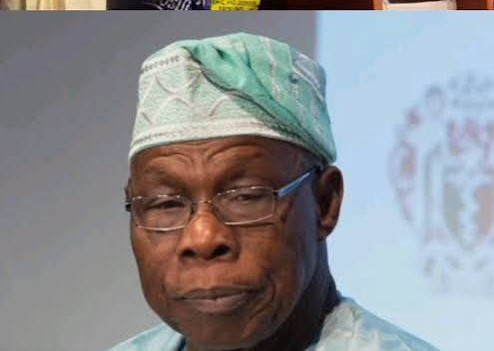
Former Nigerian President Olusegun Obasanjo strongly criticized President Bola Tinubu’s administration over its $21 billion external borrowing plan, declaring that national debt is “worse than leprosy” because it burdens and destroys future generations.
Obasanjo made these remarks at the Ajibosin 3.0 Symposium in Abeokuta, Ogun State, where he directly countered a previous statement by President Tinubu.
In April, Tinubu defended government borrowing by stating, “Borrowing is not leprosy, we just have to work hard to be able to pay for it.” Obasanjo dismissed that view as “absolute nonsense,” arguing that while leprosy physically affects only one individual, a massive national debt crisis compromises the economic future of entire generations.
Key Points of Obasanjo’s Criticism
- Generational Burden: He expressed deep concern over the long-term consequences of mounting public debt, questioning how Nigeria fell into a cycle of heavy financial traps.
- Economic Performance: Obasanjo highlighted Nigeria’s severe economic decline by recalling that when he started his farm 47 years ago, the exchange rate was approximately ₦1 to $1.85. He questioned what successive leaders have actually achieved as the currency has depreciated to around ₦1,500 to $1.
- Leadership and Competence: He openly questioned the capacity and knowledge of the political leadership, asking what they truly understand about fixing the country’s deep-seated structural issues.
- The Out-of-School Children Crisis: Beyond debt, Obasanjo warned that Nigeria’s 24 million out-of-school children represent a ticking time bomb and a “disaster of tomorrow” that leaders are failing to address.
The Federal Government’s Defense
In response to widespread criticisms regarding the multi-billion dollar loan approvals, President Tinubu defended the administration’s strategy, arguing that long-term foreign loans are essential to funding massive infrastructure projects required to transition Nigeria into a $1 trillion economy by 2030. According to the presidency, the focus should not be on the volume of debt but on the tangible value created, pointing to major developments like the Lagos-Calabar Coastal Highway, the Sokoto-Badagry Superhighway, and national electricity grid upgrades


