

The Nigerian government has announced that two firms have secured a combined ₦9 billion financing to support mini-grid deployment across four states, the Rural Electrification Agency (REA) has disclosed.
What is power grid?
A power grid is an interconnected network for delivering electricity from producers to consumers, consisting of generating stations, transmission lines, and distribution components. It ensures synchronized, real-time balancing of supply and demand across wide areas. Key entities include:
Power Grid Corporation of India Ltd: A major Indian state-owned utility (rated HOLD, high leverage), which recently appointed Burra Vamsi Rama Mohan as CMD.
PowerGrid Advisory Services (Nigeria): A company based in Ibadan focusing on advisory, which may be different from infrastructure operators.
Powergrid Africa: A provider of hybrid inverters and home battery storage systems.
Livewire PowerGrid: A Laravel package for creating data tables.
Grid Stability: Requires precise frequency matching, as imbalances can trigger widespread power failures (collapses), a persistent issue in some regions like Nigeria.
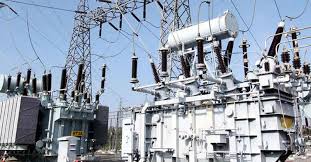
Components: Includes sub-stations, transformers, and transmission towers that move electricity over long distances.
Off-the-Grid: Operating independently of the main, centralized electrical network.
Nigeria: The national grid has faced frequent collapses through early 2026, prompting strategic management efforts.
India: Power Grid Corp is a major player managing large-scale, high-voltage transmission.
According to REA, the firms received ₦7.95 billion and ₦1.056 billion respectively for mini-grid projects in communities across Taraba, Kwara, Kogi, and Niger states. The funding is aimed at expanding access to reliable and sustainable electricity in underserved areas.
The allocations follow REA’s earlier announcement of ₦7.4 billion and ₦3.2 billion financing for two other power firms, signaling sustained investment in Nigeria’s decentralized energy sector.
The facility is backed by the Federal Government’s Distributed Access through Renewable Energy Scale-up (DARES) programme through a Performance-Based Grant (PBG) framework, supported by ₦100 billion financing in partnership with a Nigerian bank.
Commenting on the development, REA Managing Director, Dr. Abba Aliyu, praised the steady capital inflow into Nigeria’s renewable energy sector, describing it as a positive signal of growing investor confidence.
He noted that the consistency in funding demonstrates a structured and sustainable approach to energy access expansion, rather than a one-off intervention.
“What is particularly encouraging here is the consistency; this is not a one-off. It is a pattern of capital being deployed, projects moving forward, and confidence in the system continuing to grow,” Aliyu said.
He added that the financing will enable developers to access the equipment and funding needed to deliver projects faster, while communities will benefit from improved timelines for electricity access.
“This is exactly the kind of energy we hoped to unlock, where Nigerian financial institutions take the lead in powering Nigeria’s renewable infrastructure, backed by strong performance-based frameworks. We are building momentum, and it is beginning to show,” he stated.


