

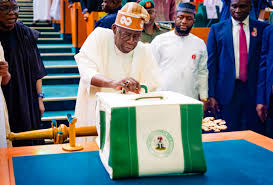
The Nigerian House of Representatives passed the ₦58.47 trillion 2026 Appropriation Bill for a second reading on Thursday, January 29, 2026.
Key Legislative Actions
Unanimous Approval: The bill, themed the “Budget of Consolidation, Renewed Resilience and Shared Prosperity,” was passed without debate during a plenary session presided over by Speaker Abbas Tajudeen.
Adjournment for Defense: Following the passage, the House adjourned plenary for two weeks to allow Ministries, Departments, and Agencies (MDAs) to defend their budget estimates before the relevant standing committees.
Committee Referral: The bill has been referred to the House Committee on Appropriations for detailed legislative work.
Budget Highlights (House Version)
The House Leader, Prof. Julius Ihonvbere, presented the general principles of the bill, highlighting a shift toward capital investment:
Capital Expenditure: ₦26.08 trillion (exceeding recurrent spending).
Recurrent Expenditure: ₦15.25 trillion.
Debt Servicing: ₦15.91 trillion.
Sectoral Priorities: Security and Defence (₦5.41tn), Infrastructure (₦3.56tn), Education (₦3.54tn), and Health (₦2.48tn).
The Senate had previously passed the bill for a second reading on December 23, 2025, before its year-end recess. The House resumption on January 27, 2026, marked the start of the lower chamber’s final push to align with the January–December fiscal cycle.
It would be recalled that President Bola Ahmed Tinubu presented the ₦58.18 trillion 2026 Appropriation Bill to a joint session of the National Assembly on December 19, 2025. Themed the “Budget of Consolidation, Renewed Resilience and Shared Prosperity,” it aims to transition the economy from “survival to growth”.
Key Budget Aggregates
Total Expenditure: ₦58.18 trillion.
Total Expected Revenue: ₦34.33 trillion.
Fiscal Deficit: ₦23.85 trillion (approx. 4.28% of GDP).
Capital Expenditure: ₦26.08 trillion.
Recurrent (Non-Debt) Expenditure: ₦15.25 trillion.
Debt Servicing: ₦15.52 trillion.
Economic Assumptions
The 2026 budget is based on the following conservative benchmarks:
Oil Price: US$64.85 per barrel.
Oil Production: 1.84 million barrels per day (mbpd).
Exchange Rate: ₦1,400 to the US Dollar.
Major Sectoral Allocations
Defense and security received the largest single share, reflecting the administration’s focus on national stability.
Defence and Security: ₦5.41 trillion.
Infrastructure: ₦3.56 trillion.
Education: ₦3.52 trillion.
Health: ₦2.48 trillion (roughly 6% of the total budget).
Key Policy Focus Areas
Single Revenue Cycle: The President aims to end “overlapping budgets” by March 31, 2026, ensuring all previous capital liabilities are closed so Nigeria can operate on a single, disciplined budget cycle.
Food Security: Priorities include input financing, mechanisation, irrigation, and storage to reduce post-harvest losses.
Counter-Terrorism: A new national doctrine reclassifies any gun-wielding non-state actors and their financial facilitators as terrorists.
Revenue Mobilization: Use of end-to-end digitization for collections in Government-Owned Enterprises (GOEs) to block leakages.


