

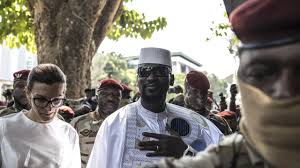
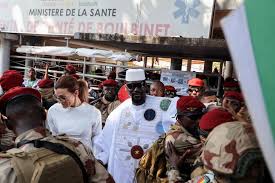
Guinea’s junta chief Mamady Doumbouya, who had pledged not to run for office after seizing power four years ago, has been elected president after securing a sweeping majority of the vote, according to initial results by the country’s election commission published on Tuesday.
Doumbouya, 41, faced eight rivals for the presidency but the main opposition leaders were barred from running and had urged a boycott of the vote held over the weekend.
In standing, the general reneged on his initial vow not to run for office and to hand the mineral-rich but poor west African nation back to civilian rule by the end of 2024.
He secured 86.72 percent of the first-round vote, according to the General Directorate of Elections, well over the threshold that would trigger a runoff vote.
Voter turnout stood at 80.95 percent, according to Djenabou Toure, head of the General Directorate of Elections.
Doumbouya had placed well ahead in districts of the capital Conakry, often winning more than 80 percent, according to official partial results read out by Toure earlier on RTG public television.
He had a similar lead in several other areas, including Coyah, a town near Conakry, and in other parts of the country, such as Boffa and Fria in the west, Gaoual in the northwest, northern Koundara and Labe, and Nzerekore in the southeast.
However, a citizens’ movement calling for the return of civilian rule questioned the figure.
“A huge majority of Guineans chose to boycott the electoral charade,” the National Front for the Defence of the Constitution said in a statement Monday.
In September 2021, Doumbouya led a coup to topple Guinea’s first freely elected president, Alpha Conde.
He has cracked down on civil liberties and banned protests, while opponents have been arrested, put on trial or driven into exile.
– ‘Ballot stuffing’ allegations –
Candidate Abdoulaye Yero Balde denounced “serious irregularities”, citing in a statement late Monday in particular the refusal to grant his representatives access to vote-counting centres and allegations of “ballot stuffing” in some areas.
Another candidate, Faya Millimono, complained of “electoral banditry” linked, he said, to influence exerted on voters.
In late September, Guineans approved a new constitution in a referendum that permitted junta members to run for office, paving the way for Doumbouya’s candidacy.
It also lengthened presidential terms from five to seven years, renewable once.
Opposition leader and former prime minister Cellou Dalein Diallo was one of three opposition leaders barred from standing by the new constitution.
Diallo was excluded because he lives in exile and his primary residence is outside of Guinea.
Former president Conde, whom Doumbouya overthrew in 2021, and ex-prime minister Sidya Toure, both of whom also live in exile, are over the maximum age limit of 80.
How Junta elected President
Mamady Doumbouya, the military leader who seized power in a 2021 coup, was declared the winner of Guinea’s presidential election on December 30, 2025.
Election Results and Mandate
Vote Share: Doumbouya secured 86.72% of the valid votes in the first round, according to provisional results from the General Directorate of Elections (DGE).
New Term: This victory grants him a seven-year mandate.
Voter Turnout: Official figures placed turnout at 80.95%, though this has been contested by opposition groups who reported tepid participation and called for a boycott.
Runners-up: Abdoulaye Yero Balde came a distant second with 6.59% of the vote.
Context and Controversy
Broken Promise: Doumbouya originally pledged after his 2021 coup not to run for office and to hand over power to a civilian government by the end of 2024.
New Constitution: His candidacy was enabled by a new constitution approved in a September 2025 referendum. This charter lifted the ban on junta members seeking office and extended presidential terms from five to seven years.
Restricted Field: Major opposition figures, including former President Alpha Condé and longtime leader Cellou Dalein Diallo, were either in exile or barred from contesting, leaving a fragmented field of eight minor challengers.
Allegations of Fraud: Opposition candidates and civil society groups, such as the National Front for the Defence of the Constitution (FNDC), labeled the vote an “electoral charade,” citing systematic fraudulent practices and intimidation.
Next Steps
The Supreme Court has eight days from the announcement to validate the results and rule on any legal challenges before they are considered final.


